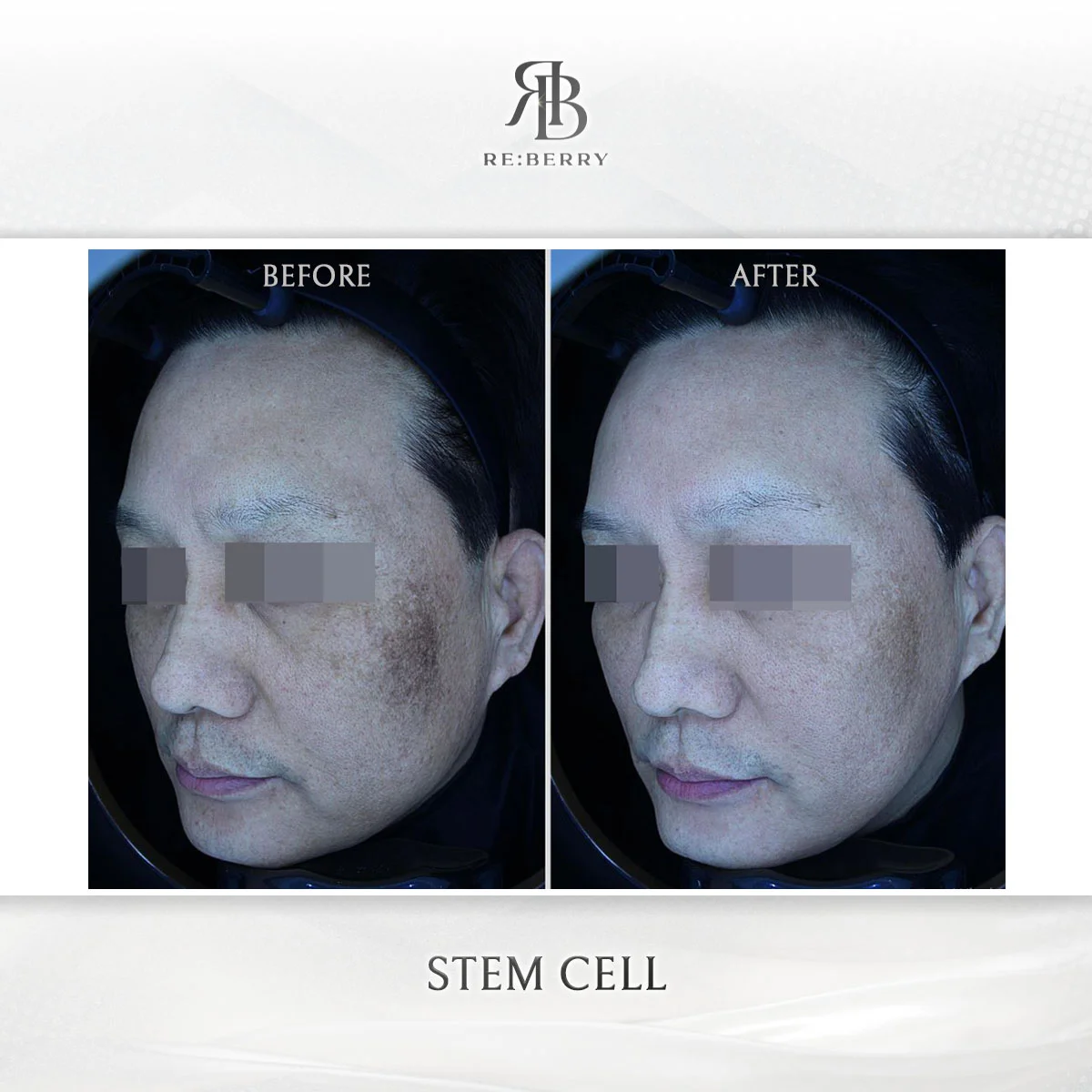
Mechanism of Action: How Stem Cell Therapy Works
Stem cell therapy in aesthetic medicine relies on autologous blood processing to concentrate regenerative growth factors. A venous blood sample of 20-60ml undergoes centrifugation at 3,000-4,000 RPM for 15-20 minutes, separating the sample into three distinct layers. The middle layer contains a platelet concentrate at 5-8 times the baseline concentration found in whole blood. This concentrated serum delivers a potent cocktail of growth factors including platelet-derived growth factor (PDGF), transforming growth factor beta (TGF-beta), vascular endothelial growth factor (VEGF), and epidermal growth factor (EGF).
Growth Factor Signaling Cascade
When reinjected at depths of 1-4mm, these growth factors bind to fibroblast surface receptors and initiate a signaling cascade that upregulates collagen types I and III production. PDGF triggers fibroblast migration and proliferation within 24-48 hours of injection. TGF-beta activates extracellular matrix remodeling over 4-12 weeks, while VEGF promotes angiogenesis that improves nutrient delivery to regenerating tissue. This multi-pathway activation distinguishes stem cell therapy from single-mechanism treatments like topical retinoids or standalone laser therapy.
Clinical Evidence for Autologous Regenerative Therapy
Peer-reviewed research supports the efficacy of autologous platelet concentrates in dermal regeneration. Eppley BL et al. demonstrated that platelet-rich preparations stimulate fibroblast proliferation rates 2-3 times above baseline levels in controlled laboratory conditions. Eppley BL et al. Plast Reconstr Surg. 2006;118(6):1409-1422. doi:10.1097/01.prs.0000239606.92676.cf
A systematic review by Aust MC et al. evaluating autologous blood therapy for facial rejuvenation found measurable improvement in skin texture, elasticity, and volume in 85% of subjects over 6-month follow-up periods. Dermal thickness measurements increased 15-25% compared to pre-treatment baselines across multiple skin types. Aust MC et al. Dermatol Surg. 2011;37(8):1155-1163. doi:10.1111/j.1524-4725.2011.02054.x
Comparative Efficacy Data
When compared to hyaluronic acid injections alone, autologous growth factor therapy produces longer-lasting collagen remodeling effects. While hyaluronic acid fillers degrade within 6-12 months, the biological stimulation from concentrated growth factors continues to drive tissue regeneration for 12-18 months after a single session. Kim DH et al. found that combining autologous concentrates with exosome delivery systems enhanced growth factor uptake by 40-60% compared to standalone injection protocols. Kim DH et al. J Cosmet Dermatol. 2021;20(9):2787-2793. doi:10.1111/jocd.14378
The Science of Eternal Booster Technology
Eternal Booster ampoules contain lyophilized regenerative peptides that amplify the biological stimulus delivered by autologous blood therapy. When combined with concentrated platelet serum, these peptides increase growth factor bioavailability at the injection site by extending the release window from 48 hours to approximately 7-10 days. This sustained-release mechanism allows fibroblasts to receive continuous regenerative signaling during the critical early healing phase, improving treatment outcomes compared to autologous concentrate alone.
The multi-session Eternal Youth protocol leverages cumulative biological effects. Each subsequent treatment builds on the collagen matrix established by prior sessions, with studies showing a 30-40% improvement in dermal density after 4 sessions compared to 15-20% after a single treatment. Adding Revinas radiofrequency at 6,000-12,000 shots introduces a complementary thermal stimulus that cross-links newly formed collagen fibers, creating a denser and more resilient dermal architecture.
Quality Standards and Processing Protocols
Korean stem cell therapy protocols operate under KFDA oversight, which mandates closed-system centrifuge processing to eliminate contamination risk. Medical-grade centrifuges maintain calibrated RPM within a 2% tolerance range, ensuring consistent platelet concentration across sessions. The autologous nature of the treatment eliminates immunological rejection, allergic reaction, and pathogen transmission concerns because the patient's own biological material serves as both source and therapeutic agent.
RE:BERRY Gangnam's Aesthetic Medicine Specialist Yoon-Gon Ryu follows standardized extraction protocols that yield platelet concentrations verified at 5-8 times baseline before reinjection. This verification step ensures therapeutic potency regardless of individual blood composition variations, maintaining consistent clinical outcomes across diverse patient populations.